
Denial Management Basics: How Clean Claims Drive Revenue Growth
On this page
Denial Management helps healthcare organizations maintain healthy cash flow by reducing claim denials and revenue loss. Coding errors, missing documentation, and insurance issues can delay reimbursements and increase administrative costs. A proactive approach improves claim accuracy and supports stronger financial performance.
Hospitals, physician groups, and specialty practices improve billing efficiency by using professional Medical Billing services. Accurate documentation, coding, and payer verification reduce preventable denials while creating a more efficient revenue cycle.
Healthcare organizations can also learn best practices through Denial Management in Healthcare to improve billing efficiency. These proven strategies support long-term revenue growth through effective Denial Management.
What Is Denial Management?
Denial Management is the process of identifying, correcting, appealing, and preventing insurance claim denials. Instead of treating denied claims as isolated issues, healthcare organizations analyze denial patterns to improve billing accuracy and reduce future claim rejections.
A strong claims denial strategy combines claim monitoring, payer analysis, staff training, and workflow improvements. This proactive approach reduces revenue loss while supporting long-term financial stability.
Common Reasons Claims Are Denied
Common causes of claim denials include:
- Incorrect patient information
- Insurance eligibility issues
- Missing documentation
- Coding errors
- Duplicate claims
- Missing prior authorization
- Late claim submission
- Medical necessity concerns
Healthcare providers that outsource Dental Billing often reduce these errors by improving claim verification and coding accuracy before submission.
Goals of Denial Management
An effective Denial Prevention Program helps organizations:
- Increase first-pass claim acceptance
- Reduce reimbursement delays
- Improve coding accuracy
- Lower administrative costs
- Identify recurring denial trends
- Strengthen revenue cycle performance
Healthcare leaders can also review the Denials Management Process to understand how structured workflows reduce preventable denials.
How Does Denial Management Improve Revenue Growth?
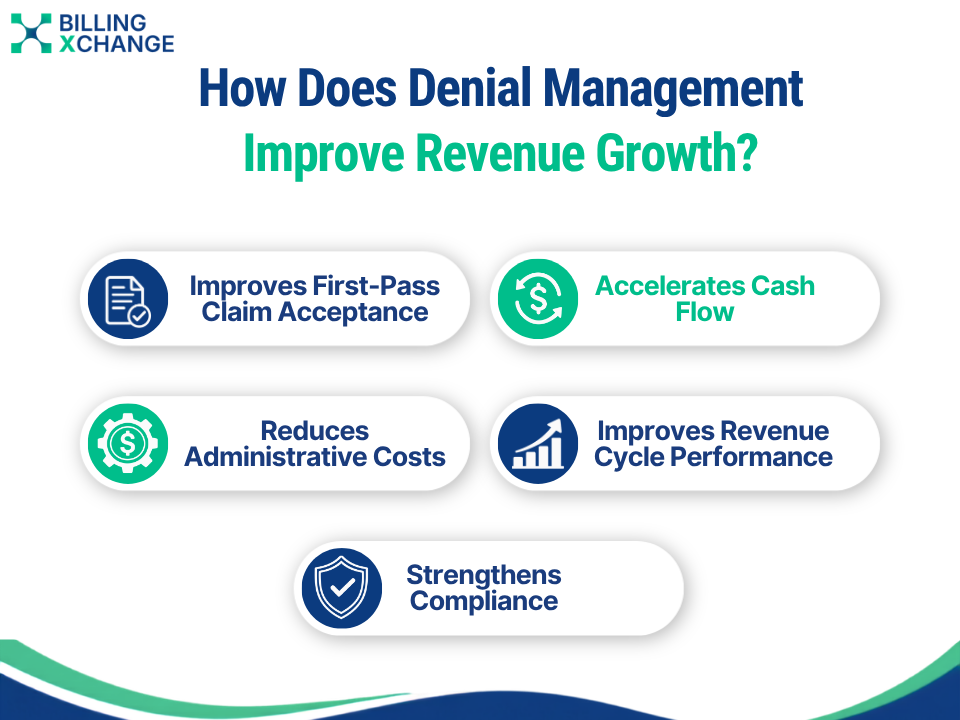
An effective Denial Management strategy does more than recover unpaid claims. It reduces billing errors, speeds up reimbursements, prevents recurring denials, and strengthens the revenue cycle. For healthcare organizations, this improves cash flow, lowers operational costs, and supports long-term business growth.
Benefits of Effective Denial Management
1. Improves First-Pass Claim Acceptance
- Submitting clean and accurate claims increases the chances of payer approval on the first submission. Fewer claim corrections reduce processing delays and administrative workload.
- Healthcare organizations also use professional Dental Billing services to improve coding accuracy and claim quality before submission.
2. Accelerates Cash Flow
- Faster claim approvals lead to quicker reimbursements and a healthier cash flow. Consistent payments help healthcare organizations manage operational expenses, invest in technology, and support long-term business growth.
3. Reduces Administrative Costs
- Resolving denied claims requires extra staff time, documentation, and payer communication. A proactive denial prevention process avoids denials, reducing manual work and improving billing efficiency.
- Organizations can also learn industry best practices through the Denial Management Specialist resource.
4. Improves Revenue Cycle Performance
- Lower denial rates reduce claim rework and allow billing teams to focus on revenue-generating activities.
- Better claim accuracy improves reimbursement rates, increases productivity, and strengthens overall revenue cycle performance.
5. Strengthens Compliance
- Accurate documentation, proper coding, and adherence to payer guidelines help reduce compliance risks.
- Standardized billing processes also improve audit readiness and ensure healthcare organizations meet changing regulatory requirements.
Why Is Denial Management Important for Healthcare Revenue?
Every denied claim delays reimbursement and increases administrative work. Billing teams must investigate denial reasons, gather documentation, communicate with payers, and resubmit or appeal claims. A proactive Denial Management process minimizes these issues by preventing avoidable denials before submission.
1. Reduces Financial Loss
- Prevent Revenue Leakage: Minimize claim denials before submission to reduce lost revenue and improve reimbursement rates.
- Maintain Healthy Cash Flow: Faster claim approvals help organizations receive timely payments and improve financial stability.
2. Lowers Administrative Costs
- Reduce Manual Rework: Preventing denials decreases the time spent correcting claims, collecting documents, and communicating with payers.
- Improve Billing Efficiency: Many healthcare organizations use professional Medical Billing services to automate claim validation and reduce administrative workload.
3. Strengthens Revenue Cycle Performance
- Improve Claim Accuracy: Clean and complete claims reduce rejection rates and increase first-pass claim acceptance.
- Increase Operational Efficiency: Billing teams can focus on high-value tasks instead of repetitive claim corrections, improving overall productivity.
What Are the Key Steps in the Denial Management Process?
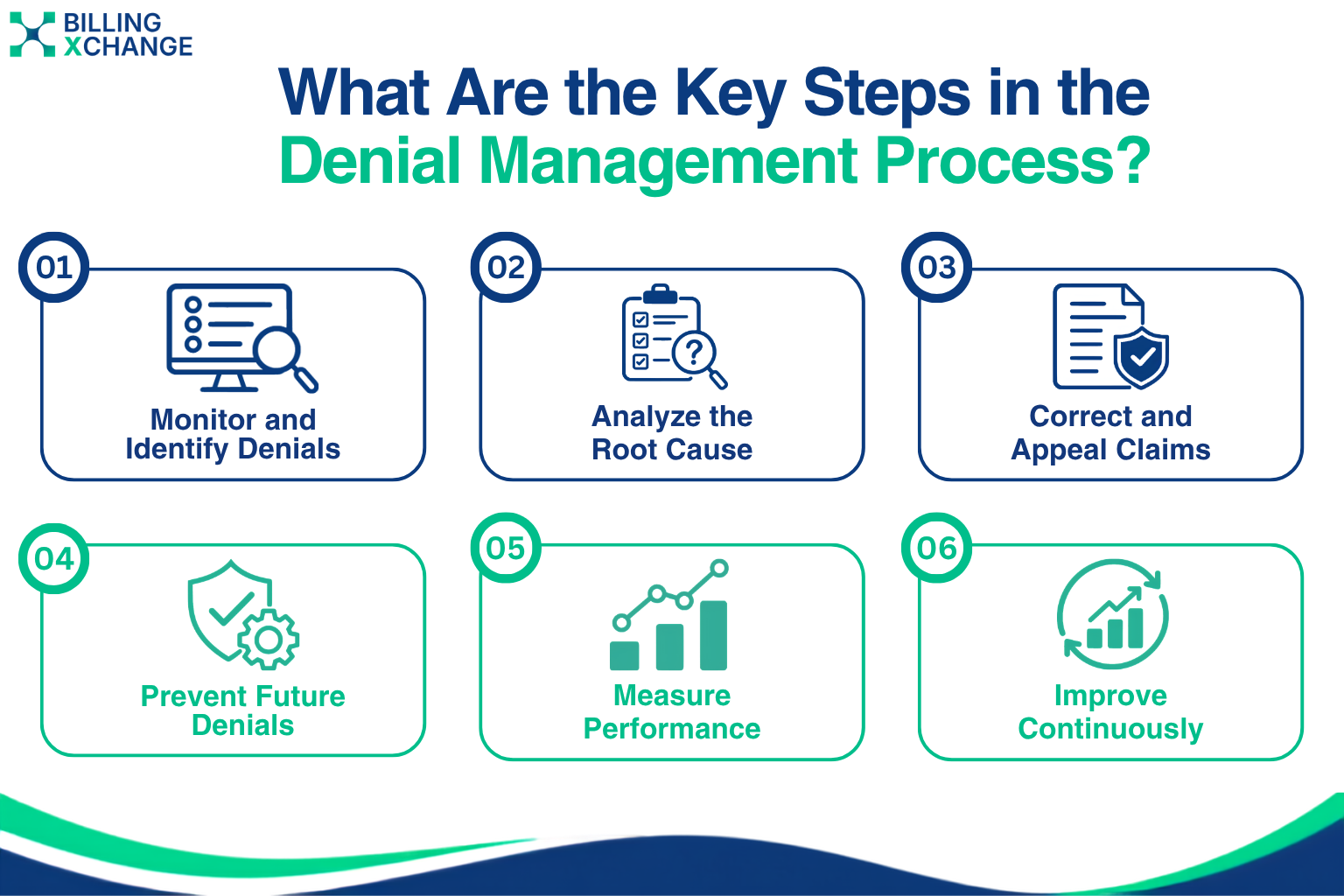
A successful Denial Management program follows a structured workflow that identifies denial causes, resolves unpaid claims, and prevents similar issues from occurring again. Following these steps helps healthcare organizations improve reimbursement rates and strengthen revenue cycle performance.
1. Monitor and Identify Denials
- Track Denied Claims: Review payer responses, categorize denial reasons, and identify recurring claim issues to improve billing accuracy.
- Monitor Key Performance Indicators: Measure denial rates, track payer-specific trends, identify common denial categories, and prioritize high-value claims for faster resolution.
2. Analyze the Root Cause
- Identify the Reason for Denials: Analyze coding errors, missing documentation, insurance eligibility issues, authorization problems, and payer requirements to determine why claims were denied.
- Prevent Recurring Errors: Regular root cause analysis helps eliminate repetitive billing issues. Many healthcare organizations use professional Medical Billing services to validate claims before submission.
3. Correct and Appeal Claims
- Submit Accurate Appeals: Correct claim information, attach supporting documentation, update coding, and follow payer-specific appeal guidelines before resubmission.
- Improve Appeal Success Rates: Timely and well-documented appeals increase reimbursement opportunities while reducing payment delays.
4. Prevent Future Denials
- Improve Billing Workflows: Strengthen staff training, update coding practices, improve documentation, verify insurance eligibility, and perform regular claim quality reviews.
- Follow Industry Best Practices: Healthcare organizations can also explore the Denials Management Process resource to learn proven strategies for reducing preventable claim denials.
5. Measure Performance
- Track Key Performance Metrics: Monitor first-pass claim acceptance, denial rates, appeal success rates, reimbursement time, accounts receivable, and collection rates.
- Optimize Revenue Cycle Performance: Regular performance analysis identifies improvement opportunities, strengthens revenue cycle performance, and supports sustainable revenue growth.
6. Improve Continuously
- Implement Process Improvements: Use performance insights to refine billing workflows, update staff training, and strengthen documentation practices for better claim outcomes.
- Optimize Revenue Cycle: Continuously improve Denial Management strategies by adapting to payer policy changes, monitoring KPIs, and implementing best practices to support long-term revenue growth.
Claim Processing and Denial Management Workflow
| Process Stage | Claim Rejection | Claim Denial | Business Benefit |
| Initial Review | Fails initial validation | Reviewed but payment is refused | Detect billing issues early |
| Common Cause | Missing or incorrect data | Payer policies, documentation, or medical necessity | Analyze root causes and prevent recurring errors |
| Resolution | Correct and resubmit the claim | Correct, appeal, and resubmit if required | Recover eligible reimbursements |
| Processing Time | Faster resolution | Longer reimbursement delays | Reduce payment delays through proactive actions |
| Ongoing Improvement | Validate claim accuracy before submission | Monitor denial trends and improve workflows | Improve revenue cycle performance through KPI monitoring |
Why Choose BillingXchange for Denial Management?
Managing claim denials takes more than fixing rejected claims. BillingXchange provides proactive Denial Management solutions that improve claim quality, reduce repeat errors, recover revenue, and strengthen overall revenue cycle performance. Our billing professionals identify denial trends, resolve outstanding claims, and apply preventive strategies to reduce future denials.
We also use technology-driven workflows and quality checks to improve first-pass claim acceptance and support faster claim turnaround. For organizations needing specialty support, integrated Dental Billing solutions help improve coding accuracy and claim submission across different services.
Every healthcare organization has unique billing challenges, so BillingXchange creates customized Denial Management strategies based on payer mix, specialty needs, and business goals. Healthcare providers trust us for accurate claim review, faster denial resolution, transparent reporting.
Conclusion
An effective Denial Management strategy is essential for healthcare organizations that want to improve financial performance and reduce revenue loss. By identifying denial patterns, correcting claims quickly, and preventing recurring issues, providers can achieve faster reimbursements, healthier cash flow, and greater operational efficiency.
Clean claims are the foundation of a successful revenue cycle. Organizations that invest in accurate documentation, proper coding, and continuous process improvement are better positioned to reduce denials and support long-term business growth.
Whether you manage a hospital, physician group, specialty practice, or multi-location healthcare organization, partnering with BillingXchange gives you access to experienced billing professionals, efficient workflows, and proven revenue cycle expertise.
Ready to simplify your dental insurance process? Contact us today for BillingXchange accurate and reliable Denial Management
Frequently Asked Questions (FAQs)
Claims denial management is the process of identifying, analyzing, correcting, appealing, and preventing insurance claim denials. It helps healthcare organizations improve claim acceptance rates, recover lost revenue, and strengthen overall revenue cycle performance.
An effective Denial Management process reduces claim denials, speeds up reimbursements, lowers administrative costs, and improves cash flow. It also helps healthcare organizations increase operational efficiency and maximize revenue.
Common causes include incorrect patient information, coding errors, missing documentation, insurance eligibility issues, lack of prior authorization, duplicate claims, and late claim submissions. Identifying these issues early helps reduce preventable denials.
BillingXchange provides end-to-end claims denial management services, including denial analysis, claim correction, appeals, payer communication, and performance reporting. These solutions help healthcare organizations improve reimbursement rates and reduce recurring denials.
Clean claims contain accurate patient information, proper coding, and complete documentation before submission. They reduce claim rework, improve first-pass acceptance rates, accelerate reimbursements, and support long-term revenue growth.

BillingXchange team
Written by the BillingXchange team. We help dental and medical practices reduce denials, accelerate payments, and maximize collections through expert revenue cycle management.